The pot cache does what its name promises: it hides. But the best of them do much more than that.
A pot cache is not a flower pot. It has no drainage hole, is not designed to contain soil directly, and is not intended for planting. Its role is to receive an existing pot — in which the plant is already on earth — and to conceal it under a more beautiful envelope, more consistent with the decor of the room. This detail changes everything: more black plastic or apparent basic terracotta, more unscrupulous subpots, more unspoiled pots in the same space. Instead, a beautiful material, a chosen shape, a visual consistency between the plant and its container — and the plant suddenly takes a completely different look.
At Amberkiln, our collection of pottery covers a wide range of materials, formats and styles: ceramic pottery caches, enamelled, sandstone, concrete, metal, wicker and braided rattan, stone resin, terracotta — round, square, hexagonal, with or without saucer, in sizes from the most compact to the most generous to accommodate large soil plants.
Choosing your pot cache: material, style and size
The first criterion is Size. The pot cache must be slightly larger than the pot it is supposed to contain — typically 2 to 3 cm in diameter more, to allow easy insertion and a little space for possible condensation. An overly fair pot cache will not let the pot in; a too large pot cache will leave a visible space between the two, which is not the desired effect. Before you buy, measure the diameter and height of your existing pot.
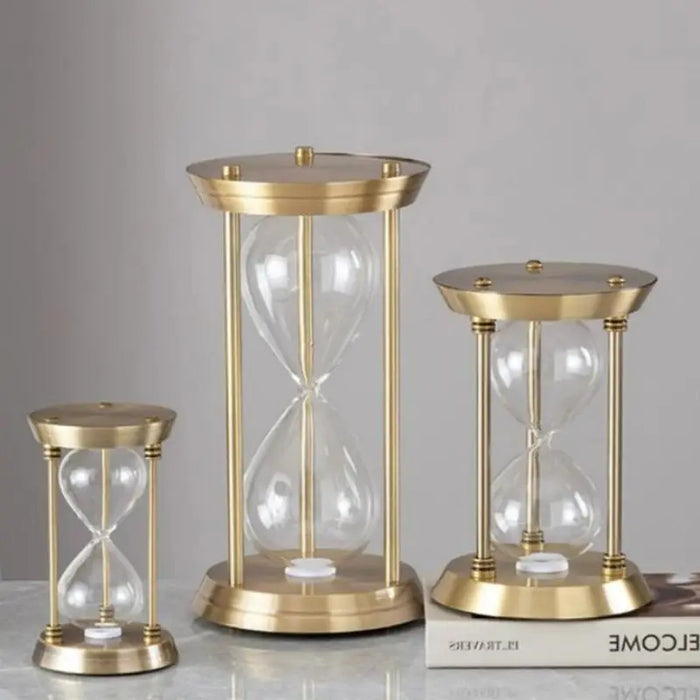
The second criterion is the material, which determines the atmosphere. The ceramic enamelled pot cache is the most widespread and versatile. It is moisture resistant, easy to clean, and exists in a wide range of colours and finishes. A enamelled ceramic in matt forest green around a pothos, a milky white enamelled under a cactus — these simple chords are among the most effective. The concrete pot-cache suitable for graphic and structured plants — cactus, agave, sansevieria — whose strong silhouette is well suited to the rigour of matter. The wicker or wicker pottery is the warmest and most organic. It is particularly suitable for large and falling plants — ficus, monstera, long pothos — in spaces with natural or bohemian spirit. Its airy structure also allows a slight circulation of air around the pot, which is beneficial for most plants. The metal pot cache — brass, copper, galvanized steel — brings a more contemporary and often more precious touch. It works very well in minimalist or industrial interiors.
Can I hide with or without saucer?
It is a practical as well as aesthetic question. A pot cache without saucer is suitable if the inner pot has its own saucer, or if the plant is watered by absorption from the bottom. A pot cache with integrated saucer is more autonomous — it holds water and protects the surface on which it is placed. It is particularly useful on a wooden parquet, a wooden shelf or on a coffee table where any trace of moisture would be harmful.
Some pot caches are equipped with a water storage system with level indicator. These models allow less frequent and more controlled watering — particularly useful for owners who travel or tend to forget to water. The plant draws water from the reserve according to its needs, which limits the risk of over-watering.
Grouping pot caches: how to create a coherent plant composition
A single plant in a nice pottery hideout is good. A group of plants in matching pot caches is a composition. Coherence between pots is key: they don't need to be identical, but they have to share something — the same material (all ceramic), the same color (all in neutral tones), or the same style (all artisanal). Mixing a wicker pot, a concrete and a cordless gold metal between them produces a mismatched result.
In terms of composition, vary the heights of plants rather than the heights of pot caches — pot caches on the ground can be at the same level, it is the plant that creates the relief. Alternate foliage — a large-leaved plant next to a thin-leaved plant, a falling plant next to an upright plant — and the composition is gaining in depth and life.
Explore Related Collections
Continue browsing Home Decor, Living Room, Bedroom, Dining Room.